
Therapy for Trauma & PTSD | Carmel, IN

If you’re dealing with the effects of trauma or post-traumatic stress disorder (PTSD), it can impact how you feel, think, and respond to everyday situations. At Intentional Living Counseling in Carmel, Indiana, we help individuals process difficult experiences in a safe, supportive environment and develop practical strategies to reduce distress.  Through trauma-informed, evidence-based approaches, you’ll learn how to regulate your nervous system, feel more grounded, and begin moving forward with greater stability and confidence.

Understanding Trauma and PTSD

Post-traumatic stress disorder and trauma can affect how you think, feel, and respond to the world around you long after a difficult or overwhelming experience. For many people, these responses develop as the brain and body try to protect you, even when the situation is no longer present.

It can show up as heightened stress, intrusive memories, emotional numbness, or feeling constantly on edge. You may notice strong reactions to certain triggers or find it difficult to feel safe, relaxed, or fully present. Understanding how trauma impacts your nervous system is an important first step toward healing, and creating a greater sense of stability and control.

You may be experiencing symptoms of trauma or PTSD if you:

  • Experience intrusive memories, flashbacks, or distressing dreams
  • Feel constantly on edge, easily startled, or hyperaware of your surroundings
  • Avoid certain places, people, or situations that remind you of past experiences
  • Struggle with strong emotional reactions or feel overwhelmed by triggers
  • Feel disconnected from yourself, others, or your surroundings
  • Have difficulty relaxing, sleeping, or feeling safe in everyday situations

How therapy can help Trauma and PTSD

Therapy for PTSD and trauma focuses on helping you safely process difficult experiences while building the tools needed to feel more grounded and in control. Rather than avoiding or suppressing what you’ve been through, therapy creates a structured, supportive space to work through it at a pace that feels manageable.

Through trauma-informed approaches, you can begin to reduce the intensity of triggers, better understand your emotional and physical responses, and develop practical strategies to regulate your nervous system. Over time, this helps you feel more stable, present, and able to move forward without being overwhelmed by past experiences.

Our approach in dealing with Trauma and PTSD

At Intentional Living Counseling, our approach to trauma and PTSD therapy is grounded in safety, trust, and meeting you where you are. We focus on creating a supportive environment where you can begin to process difficult experiences at a pace that feels manageable.

We use evidence-based, trauma-informed approaches, such as Accelerated Resolution Therapy (ART) and EMDR, to help you work through past experiences, reduce the intensity of triggers, and better understand your emotional and physical responses. Along the way, we help you build practical tools to regulate your nervous system, feel more grounded, and support long-term healing and stability.

Learn how Accelerated Resolution Therapy® can help with Trauma and PTSD!

What you can expect at Intentional Living Counseling:

These are the kinds of changes many people begin to experience as they process trauma and build a greater sense of safety and stability.

  • Reduced intensity of triggers and emotional reactions
  • Improved ability to feel calm, grounded, and present
  • Better understanding of your thoughts, emotions, and responses
  • Increased sense of safety in everyday situations
  • Greater control over stress and nervous system reactions
  • A stronger sense of stability, confidence, and forward movement

Taking the first step toward support can feel difficult, especially when you’ve been managing things on your own. Therapy offers a space where you can begin to feel more supported, understood, and in control at a pace that feels right for you. When you’re ready, reaching out is a simple way to start that process.

FAQs

Answers to questions people often have about trauma, PTSD, and the healing process.

Contact
What are the signs that therapy might help with trauma or PTSD?

Trauma can show up in many ways, and it doesn't only follow a single catastrophic event. It can build from ongoing stress, loss, or difficult experiences over time. You might notice intrusive memories or flashbacks, trouble sleeping or nightmares, feeling on edge or easily startled, avoiding reminders of what happened, emotional numbness, or a sense of being stuck. If distressing experiences from the past are affecting how you feel or function today, therapy can help you process them safely and begin to feel more like yourself.

How does therapy help with trauma?

Trauma-focused therapy helps your mind and body process difficult experiences so they no longer carry the same emotional charge. Rather than reliving painful events over and over, we use approaches designed to help you move through them at a safe, manageable pace. One option we offer is Accelerated Resolution Therapy® (ART), a brief, structured approach that helps the brain reprocess distressing memories, often in just a few sessions, and without requiring you to describe your trauma in detail if you'd rather not.

Can I meet with a therapist in person or virtually?

We offer in-person sessions at our office in Carmel, Indiana, serving clients across Carmel and the surrounding Indianapolis area, including Westfield, Noblesville, and Zionsville. We also provide secure virtual sessions for clients throughout the state. For trauma work specifically, some approaches are most effective in person, so your therapist can help you decide which setting is the best fit for you.

Will I have to talk about my trauma in detail?

Not if you don't want to. One of the things many clients find reassuring is that healing from trauma doesn't require you to recount every painful detail out loud. With approaches like ART, you stay in control the entire time, and much of the work can happen without extensive retelling. Your therapist will always move at a pace that feels safe for you.

Does trauma often show up alongside other struggles?

Very often. Unresolved trauma frequently underlies or overlaps with anxiety, depression, sleep problems, and difficulty in relationships, and it's common not to realize how connected they are until you start working through them. Whether trauma is your main focus or part of a bigger picture, individual therapy gives you a safe space to address it at your own pace.

Meet the Therapists You'll Work With

Trauma work is deeply personal, and finding the right therapist matters. Our licensed counselors each bring their own training and strengths, and we'll help pair you with the one who's the best fit for your needs and comfort. You can learn more about the members of our team on our About page.
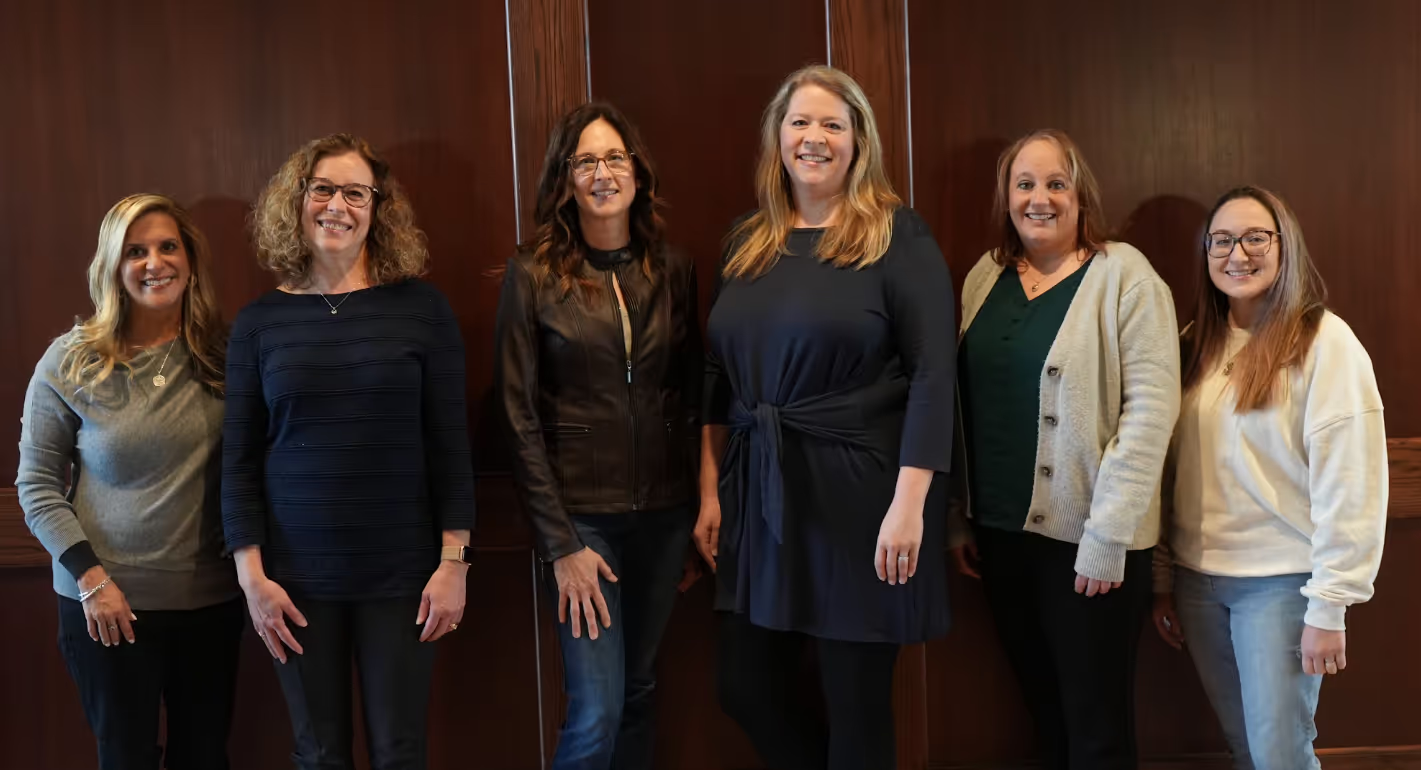
Therapists standing together in their office

Looking for help with PTSD or trauma? Use the form to contact us below!

We offer help for people in Carmel, Indiana and surrounding areas including Westfield, Noblesville, Zionsville, and Indianapolis. We also offer help through remote sessions.

Start Your Counseling Journey

Taking the first step toward counseling is a meaningful decision — and you don’t have to navigate it alone. Whether you’re seeking support for yourself, your child, your teen, or your family, our therapists are here to help with compassionate, personalized care.

If you’re ready to begin making positive changes, we invite you to reach out using the form to the right.

NOTE: If this is an emergency, please call 911 or 988, go to your nearest Emergency Department, or contact your local crisis hotline immediately.

Will you be using insurance?
Are you interested in working with a specific counselor? Select all that apply:
Thank you! We'll reach out soon!
Oops! Please make sure you filled out everything.
Address
11495 N. Pennsylvania St, Suite 126, Carmel, IN 46032
Contact
317-643-3775
Hours
Monday - Friday:  8am-7pm
Note: Individual therapist hours may differ.
2025 Intentional Living Counseling